You built fast. That was the right call. The problem is what happens when the platform changes its pricing, deprecates an API, or simply stops working the way your business needs it to.
Every founder who has chosen a no-code platform made a reasonable decision. Speed to market is real. Reducing early technical risk is real. Being able to validate an idea without writing a line of code is a genuine strategic advantage— in year one.
The problem is not no-code. The problem is what no-code becomes when your company grows.
It becomes the foundation you cannot move, and the ceiling you cannot raise.

The shelf of tools - each one a subscription. Each one a dependency.
How it starts
The reasonable choice that compounds into a structural risk
You picked up Webflow, Airtable, Zapier, Bubble — or some combination of them. You built something functional in weeks instead of months. Investors saw it. Clients used it. The demo worked.
Then the bill arrived. Not once, but every month. And it scaled with you — not in a good way. The more records you stored, the more automations you ran, the more users you added, the more you paid. No-code platforms are priced for your growth. Their revenue goes up as yours does.
The logic of your business is now locked inside someone else’s platform. If they change their pricing, their API, or their terms — your product changes too.
We have watched this play out with enough clients that the pattern is predictable. It usually surfaces around months 18 to 24, when one of three things happens: a platform changes its pricing structure, a core integration breaks, or a product requirement emerges that the tool simply cannot handle.
At that point, the founder faces a choice that no one warned them about: absorb an enterprise-level monthly cost for a tool that still doesn’t do what you need, or rebuild, at far greater cost and disruption than if you’d built on owned infrastructure from the beginning.
3×Average cost increase at scale vs. Year 1 no-code pricing
18moMedian time before founders hit a no-code ceiling
$0Equity value in a system you do not own or control
The real cost
You are not building an asset. You are renting one.
This is the distinction most founders miss in the early days, and it matters enormously by the time you are at Series A or trying to pass technical due diligence with an enterprise client.
When a technical investor or enterprise buyer looks at your infrastructure, they are not looking at your product. They are looking at what you own. A system built on no-code tools is not yours. You have no access to the underlying data architecture. You cannot audit the security posture. You cannot demonstrate a migration path if the platform changes or fails.
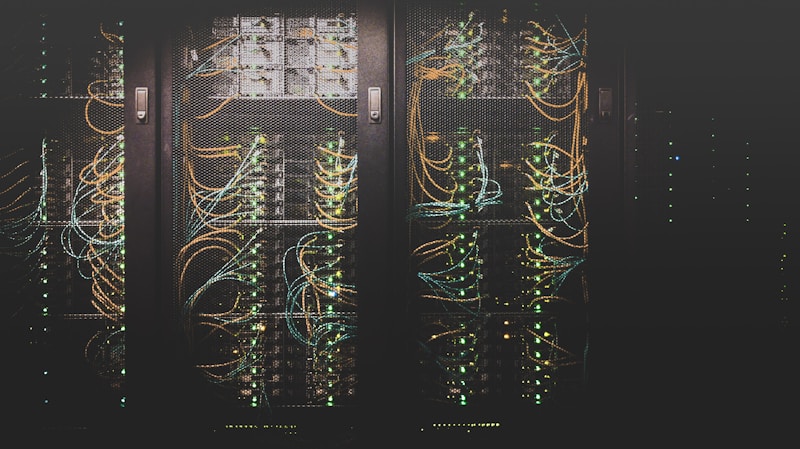
Automation pipelines, the ones worth building are the ones you own end-to-end.
A custom system — even a modest one — is a documented, auditable, extensible asset. It lives in your codebase. Your team controls it. It can be handed to a new developer, expanded without a vendor’s permission, and stress-tested before it matters.
Risk signal
If your critical operations — client onboarding, data processing, billing, reporting — run on a platform you do not own, you have a single point of failure that is entirely outside your control.
The comparison
What you get, and what it actually costs you
No-Code Platform
Custom Infrastructure
Fast to launch. Slow to scale.
Slower start. Compounds in your favour.
Priced per record, per seat, per feature.
Fixed infrastructure cost. No per-unit tax.
Logic lives inside the platform.
Logic lives in your codebase.
Vendor controls your migration path.
You control your migration path.
Fails technical due diligence at growth stage.
Passes due diligence. Demonstrates maturity.
Monthly subscription. No exit. No equity.
Owned asset. Documented. Transferable.
The right question
It is not “should I use no-code.” It is “which parts of my business should I never build on rented infrastructure.”
No-code tools have a legitimate place in a serious company’s stack. Marketing sites, internal tools, early prototypes — these are reasonable places to use platforms you do not own, because the cost of getting it wrong is low.
The mistake is building your core data model, your client-facing product, or your operational backbone on top of a platform where the rules can change without your consent.

Architecture decisions — made once, paid for across the entire life of the company.
At Kivara, we have done the rebuild. We have taken companies through the migration from no-code foundations to owned infrastructure, always at a cost that far exceeded what it would have taken to build right the first time. The conversation is always the same: “We knew we’d have to rebuild eventually. We just didn’t know it would happen this fast.”
It always happens faster than expected.
Custom systems cost more upfront. But they are assets. No-code tools are subscriptions. Know the difference before you build your core infrastructure on a platform you do not own.
The question to ask before you commit is simple: what does this decision cost us in two years if it is wrong?
For a marketing page, the answer is: almost nothing. You move it.
For your billing system, your client portal, your operational data layer, the answer is months of engineering time, disrupted operations, and a rebuild bill that lands at the worst possible moment.
Kivara builds owned infrastructure for founders and operators who are done renting. If you are evaluating your current stack or planning your next build, the architecture conversation is the one to have first.
Ready to audit your stack?
If you are running critical operations on no-code tools and you are not certain what that costs you at scale, start there. DM us and we will tell you whether it is a risk worth managing now, or one you can afford to defer.
DM “SYSTEMS” to start the conversation